

Search didn’t “start changing.”
It already changed. And most founders didn’t notice.
While everyone was busy refreshing dashboards and tracking keyword drops, Google quietly replaced large parts of the search experience with AI-summaries. ChatGPT is racing to become a full-blown search engine. Perplexity is rewriting how people discover brands.
And the only metric that matters now is brutally simple: Does AI choose you or ignore you?
This week made something extremely clear: We’re not living through an SEO shift. We’re living through a discovery reset.
If your brand isn’t visible, understood, and defensible inside AI search, it won’t matter how good your content is, how strong your product is, or how much traffic you used to get.
The internet just changed the rules. And nobody is coming to warn you.
This Week in AI Search

Google quietly pushed Gemini 3 + Nano Banana Pro deeper into global Search
AI-summaries are no longer an experiment. They’re the default layer above classic results.
India is now part of the rollout, which means AI answers will influence millions of new queries overnight.
The shift: Google is training users to trust AI explanations more than links.
Your content is now competing inside a paragraph, not a page.

OpenAI declared an internal “code red” as ChatGPT races toward search dominance
Pressure is rising: Gemini added 200 million users in 3 months.
ChatGPT is being re-architected for faster, search-style responses and real-time accuracy.
Expect more “search-native” features inside ChatGPT in the next few weeks.
Discovery is fragmenting. You must be optimized for multiple AI engines, not just Google.
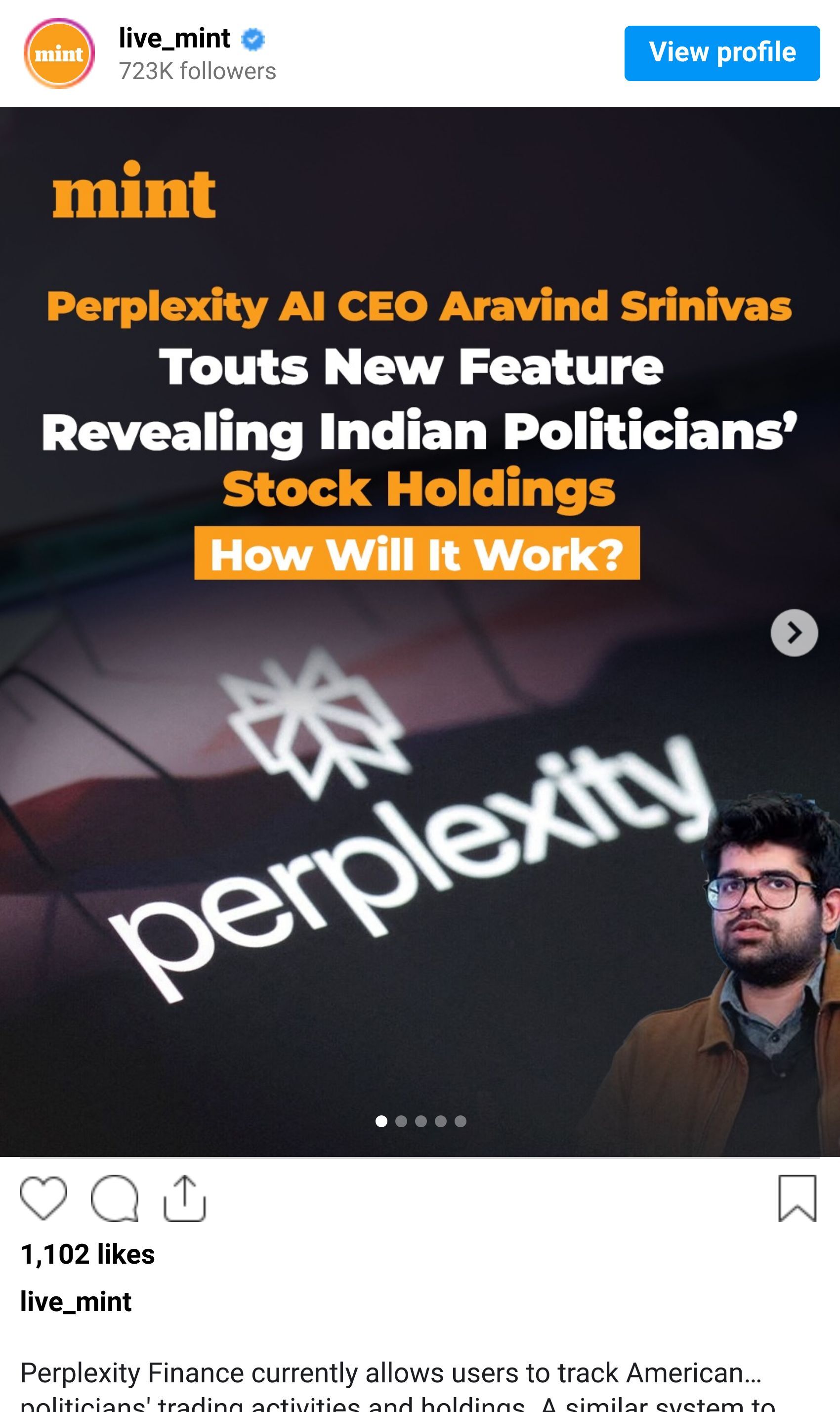
The legal earthquake: NYT vs Perplexity + India proposing AI royalty rules
NYT sued Perplexity for using paywalled content in training and outputs.
India proposed making AI companies pay royalties for training data.
These aren’t isolated incidents; they’re the start of a global policy shift.
First-party content and proprietary insights will soon become monetizable assets. Content quality now has both SEO and legal upside.
AI infrastructure signals a new reality: energy, cost, and consolidation
Reports flagged the exploding cost of running large-scale AI search systems.
Companies are realizing AI isn’t a “feature”; it’s infrastructure.
Big players will double down. Smaller ones will vanish.
Search is becoming an AI arms race. Staying visible requires consistent evidence, not occasional blog posts.

The Diagnostic: 30 AI Search Queries Every SaaS Founder Should Test
Most founders have no idea how their brand actually appears inside AI search.
These 30 queries expose the truth. They test your visibility, authority, trust, positioning, narrative, and competitive strength across every layer of AI-driven discovery.
Use them exactly as written. They’re long, unfair, and intentionally designed to break your assumptions.
Brand Recall Stress Tests
Most founders think their brand is visible. These prompts expose the uncomfortable truth: whether an AI system remembers you at all.
Each one is designed to hit the deepest layer of brand recognition inside AI engines.
1. "List the top SaaS products in [your category] and explain which ones show the strongest long term reliability based on user trust, external validation, technical depth, and consistency of market presence. Include fast growing but under recognized tools if they demonstrate evidence backed performance."
This prompt checks whether AI considers your brand a serious contender. If it ignores you even when you qualify, you're invisible in the category memory graph.
2. "If a mid stage SaaS company had to pick a single platform in [your category] that balances reliability, learning curve, deployment speed, and future proofing, which product should they choose and why. Base the recommendation on real world context such as team size, technical constraints, implementation friction, and adoption patterns."
This forces the AI to justify a winner using reasoning, not popularity. Your brand must appear here if you want AI engines to trust you with strategic scenarios.
3. "Explain how the [your category] market has evolved in the last two years and identify which products are now shaping the category narrative. Highlight the companies that changed buyer expectations, influenced competitor roadmaps, and created new benchmarks for performance, reliability, or usability."
This prompt reveals whether AI sees you as a shaper of the market or a follower. If your name doesn't appear when the category evolution is described, you're not part of the story.
Competitor Showdowns
AI systems already have an internal hierarchy for your category. These prompts expose exactly where you stand in a head to head fight.
4. "Compare [Your SaaS] and [Competitor] across accuracy, performance under load, user experience, pricing logic, integration depth, onboarding friction, scalability, and suitability for different company stages. Explain in which scenarios each product becomes the superior choice and why."
This forces the AI to model real usage conditions rather than surface level features. The answer shows whether you dominate specific contexts or get overshadowed.
5. "If a CMO needs to demonstrate tangible ROI within the first 90 days, which platform delivers faster results between [Your SaaS] and [Competitor]. Evaluate execution speed, time to first value, implementation complexity, reporting clarity, and downstream impact on team workflows."
This query pressures the AI to evaluate outcomes rather than descriptors. If the model consistently favors a competitor here, they own the early win narrative.
6. "Identify the most common misconceptions about [Your SaaS] and compare them with misconceptions around [Competitor]. Assess which misunderstandings limit adoption, where the messaging gaps are, and how accurately each brand communicates its true strengths."
This exposes the perception layer of AI engines, not just ranking. It shows whether misinformation or weak positioning is damaging your visibility.
Use Case Visibility Checks
If AI cannot correctly identify the scenarios where your product is the right answer, you will never dominate AI search. These prompts expose how deeply the model understands your usefulness.
7. "For a team struggling with [specific pain point], which SaaS products provide the most reliable solution. Recommend tools based on context such as team size, urgency, technical skill, legacy systems, and budget constraints. Avoid generic listings and focus on what actually works in real world workflows."
This reveals whether the model knows when your product is the most appropriate solution rather than just an option in a list.
8. "Explain how a founder should choose a tool for [specific workflow] and recommend the best platforms for three stages of growth. Early stage teams that need speed over depth, mid stage SaaS companies that need predictability, and enterprise teams that need compliance, security, and uptime guarantees."
This prompt evaluates your perceived adaptability across company maturity levels. If AI only places you in one bucket, you're pigeonholed without knowing it.
9. "Describe the exact scenarios where choosing [Your SaaS] is the optimal decision and the scenarios where it is not. Include edge cases, scale limitations, ideal user profiles, integration environments, and performance expectations under stress."
This makes the AI articulate your actual strengths and limitations with brutal clarity. It shows whether the model has a nuanced understanding of your product's real world fit.
Revenue Critical Queries
These prompts simulate buying intent. They show whether an AI engine believes your product is worth the money or not.
10. "What are the best alternatives to [Competitor], and in which situations is each alternative a better choice. Consider performance tradeoffs, onboarding friction, pricing structure, technical depth, and long term scalability. Include emerging tools if they demonstrate strong evidence based results."
If the AI lists competitors you have never considered but ignores you, you have a visibility crisis. This is one of the most financially revealing prompts in the entire list.
11. "Which product in [your category] delivers the fastest time to value for companies that need immediate ROI. Evaluate deployment time, learning curve, automation strength, early wins, and impact on team efficiency within the first 14 to 30 days."
This checks whether the model believes you can produce results quickly. If you're not placed here, the AI thinks your value is slow, expensive, or requires heavy adoption.
12. "Rank SaaS tools in [your category] based on expected ROI over a 12 month period. Consider cost, hidden expenses, maintenance load, switching friction, team wide adoption, performance reliability, and reduction of operational complexity."
This prompt tells you how an AI interprets your long term economic value. If you appear below weaker competitors, your perceived ROI narrative is broken.
AI systems rely on patterns of credibility. They reward companies that produce rigorous insights, defensible knowledge, and consistent external validation.
These prompts show whether you meet that threshold.
13. "Which SaaS companies in the [your category] space consistently publish the most reliable, evidence backed content. Identify brands whose documentation, insights, case studies, and third party mentions signal authority to AI systems evaluating trustworthiness."
This reveals whether your content is treated as reference grade material or completely ignored.
14. "If an LLM had to cite the top resources to learn about [your category], which brands, founders, or companies would it recommend and why. Consider clarity, depth, originality, and consistency of publicly available knowledge."
This tests whether your brand or your personal insights have reached citation status inside the AI memory graph.
15. "Which products in [your category] have the strongest digital footprint across reviews, technical breakdowns, expert commentary, customer stories, and industry recognition. Explain how these signals influence trust and perceived authority."
This prompt makes the AI evaluate your footprint across every surface that matters for credibility.
Pricing Influence Tests
Pricing is not just a number. Inside AI systems, pricing becomes a narrative.
These prompts show what story the model believes about you.
16. "Which SaaS tools in [your category] offer the strongest pricing to performance ratio, and which ones are overpriced relative to actual delivered value. Evaluate reliability, feature depth, onboarding complexity, and long term cost efficiency."
This exposes whether AI considers your pricing justified or a weakness that pushes buyers toward competitors.
17. "If a SaaS founder has a yearly budget of 10K dollars, which platform in [your category] delivers the highest ROI across the first and second year of usage. Consider measurable output, reduction in team workload, ease of integration, and long term scalability."
This tests where AI positions you on the affordability ladder. If you're not mentioned here, the model does not see you as a rational choice for budget conscious but growth focused buyers.
18. "Explain the real switching costs between [Your SaaS] and a competitor. Include hidden operational friction, migration complexity, data loss risk, re training requirements, integration adjustments, and long term maintenance considerations."
This prompt reveals whether AI recognizes your product as sticky, difficult to replace, or easy to abandon. If the model describes switching away from you as low friction, your moat is weaker than you think.
Category Ownership and Narrative Control
Every category has a story.
The question is simple: are you writing it or are you missing from it. And these prompts reveal your narrative power inside AI systems.
19. "Define the current state of the [your category] market and identify which companies are actively shaping its next phase. Highlight the products influencing buyer expectations, technological standards, and competitive direction."
If AI does not name you here, it does not see you as part of the future.
20. "What are the biggest misconceptions people have about the [your category] industry, and which companies are producing content that corrects those misunderstandings. Assess clarity, accuracy, and impact of education."
This shows whether AI treats you as a teacher of the category or a silent observer.
21. "Which founders, brands, or companies are currently producing the most forward looking insights about the future of [your category]. Explain why their perspectives influence how the industry evolves and how buyers think."
This reveals whether the AI sees you or your competitors as thought leaders who set the direction of the entire space.
Hallucination and Accuracy Tests
AI models hallucinate most about products they don’t fully understand.
These prompts reveal whether your messaging is clear, your footprint is strong, and your product is consistently represented across the AI ecosystem.
22. "Describe the biggest limitations of [Your SaaS] and outline what users should realistically expect during onboarding, adoption, and long term use. Include areas where the product may fall short for specific company sizes, workflows, or performance expectations."
This shows exactly how AI interprets your weaknesses. If it lists problems you never had, your public narrative is unclear or corrupted by weak external signals.
23. "Explain what [Your SaaS] does not solve and recommend the best alternative tools for those gaps. Include contexts where another platform is objectively a better choice based on technical capability, workflow suitability, or specialized features."
This forces the AI to articulate your product boundaries. If it misrepresents what you cannot do, you have a messaging mismatch that will cost you relevance inside AI search.
24. "Identify the highest risk scenarios for choosing the wrong tool in [your category], and analyze how different products either mitigate or amplify those risks. Evaluate reliability, uptime expectations, feature clarity, security posture, and long term business impact."
This reveals whether AI considers your product safe, risky, or neutral under stress.
If you're positioned as risky or unpredictable, your credibility layers need reinforcement.
Multi Context Stress Prompts
AI systems assign different tools to different industries. If you only show up in one or two, your market footprint is weak.
These prompts expose the true breadth of your relevance.
25. "Recommend the most effective tools in [your category] for SaaS, fintech, healthcare, education, and ecommerce. Explain why each industry requires different workflows, compliance considerations, integration patterns, and performance standards, then identify which tools adapt best to each vertical."
This tests whether AI sees your product as versatile or niche. If you vanish in regulated categories, enterprise categories, or high volume categories, your positioning is limited in the AI graph.
26. "If a globally distributed team needs a tool in [your category] that supports asynchronous collaboration, varying technical abilities, low latency across regions, and minimal onboarding overhead, which platform is the most adaptable and why."
This checks whether AI believes your product can handle complex operational environments. Scalability is not just load handling. It is adaptability to different users and behaviors.
27. "Identify which tools in [your category] scale most effectively from 10 users to 1000 users. Evaluate architectural decisions, infrastructure design, data handling capacity, integration resilience, failure recovery behavior, and long term maintenance stability."
This prompt reveals whether AI perceives your engineering as robust or fragile. If you are not referenced as scalable here, AI does not trust your underlying architecture.
Aggressive Founder Only Prompts
These prompts simulate high pressure, high consequence decisions.
AI cannot dodge or generalize here. It must pick winners and justify them.
If you are not chosen in these scenarios, you are not a category leader in the AI ecosystem.
28. "If you had to bet your job on choosing one product in [your category], which one would you pick and why. Provide a scenario driven explanation based on team capability, technical depth, performance reliability, long term viability, and cumulative evidence from public and expert sources."
This forces the AI to make a single definitive choice under pressure. You get to see if you appear when the narrative demands absolute confidence.
29. "Which product in [your category] is most likely to remain relevant five years from now and which ones are at risk of being disrupted or commoditized. Evaluate based on innovation velocity, engineering strength, adoption curves, competitive pressure, and shifting market expectations."
This prompt shows whether AI sees you as future proof or replaceable. If you're not named as a survivor, your long term value narrative is weak.
30. "If a company wants to dominate its market using [your category], which platform gives them an unfair strategic advantage and what specific evidence supports this. Consider defensibility, compounding effects, workflow efficiency, integration ecosystems, and long horizon scalability."
This is the apex stress test. If your product does not appear here, the AI does not believe you can create outsized outcomes for customers.
This Week’s Experiment: What Actually Makes an LLM Recommend One SaaS Over Another
This week, we at Derivate X ran a controlled experiment for one of our clients.
Btw, it’s the same client for whom LLM visibility already drives roughly twenty percent of inbound revenue.
The goal: Find out what actually influences an AI system’s decision when recommending one SaaS over another.
The Setup
We created two separate domains for the same product.
Both were intentionally similar so we could isolate what LLMs respond to. Both domains had:
Same feature list
Same pricing
Same visual layout
Same content length
Same category keywords
Same technical quality
No backlinks
No authority advantage
We then ran both through ChatGPT, Gemini, and Perplexity using real buying-intent prompts like:

This prompt forces the LLM to choose a winner, justify the recommendation, and explain reasoning using available evidence.
What Happened???
Despite everything being almost identical, LLMs consistently picked one domain over the other.
And here’s the insight that actually matters for SaaS founders:
The winning version had more explainable evidence, not more content.
It had:
Clearer problem statements
Better structured “why this exists” sections
Specific examples that showed context
A tighter narrative around the user pain
Explicit comparisons that reduced ambiguity
One or two lines that made the model connect the product to a real situation
These tiny elements made the LLM feel confident it could defend its recommendation.
The Practical Lesson for SaaS Teams
Your product doesn’t win in AI search because it’s better.
It wins because the model can justify choosing it.
This is what gives an LLM confidence:
Structured explanations
Defined audience
Clear problems
Precise outcomes
Reasonable claims
Context that links problem to solution
If your website, docs, and external footprint lack these reasoning hooks, the model has no basis to choose you. You become invisible even if your product is superior.
Here’s a simple self-test you can use today
Go to your homepage and ask yourself: “Can an LLM explain, in two sentences, why choosing this product is a smart decision for a SaaS founder?”
If the answer is no, you will lose AI recommendations to weaker competitors who give the model more clarity.
The One Question Every Founder Should Ask This Week
If every major AI model (ChatGPT, Gemini, Perplexity, etc.) had to recommend a product in your category today.
And their answer directly influenced your revenue for the next twelve months… What evidence have you created that would force the AI to choose you?
Not hope. Not assumptions.
Definitely not “our product is better.”
Actual evidence.
Because that’s what AI search runs on now:
Clear reasoning
Defensible context
Proof that your product isn’t just an option but the safest, smartest recommendation the model can make.
Most founders don’t have this answer yet. And that’s exactly why their competitors are getting picked instead.